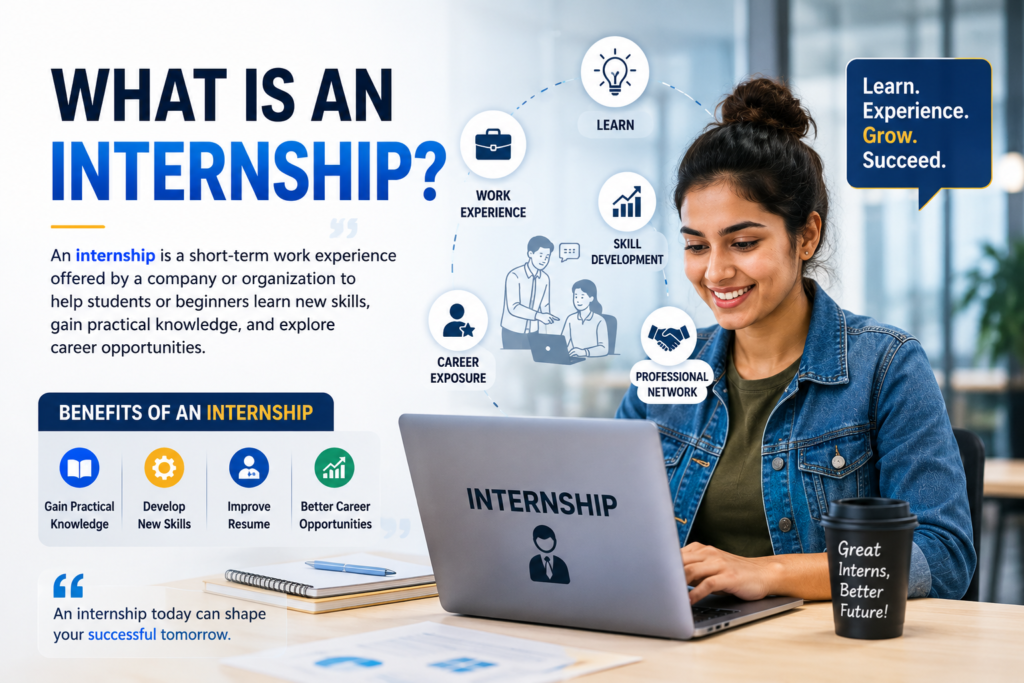
What is an Internship?
An internship is one of the best ways to gain real-world work experience before starting a full-time career. Whether you’re a student, recent graduate, or someone looking to switch careers, an internship helps you develop practical skills, understand workplace culture, and build confidence.
In this guide, you’ll learn what an internship is, its benefits, types, eligibility, duration, and how to get one.
What is an Internship?
An internship is a short-term training program offered by companies, organizations, or institutions to help students and beginners gain practical work experience in a professional environment.
Unlike classroom learning, internships allow you to apply your knowledge to real projects while working with experienced professionals. Some internships are paid, while others are unpaid, depending on the company and industry.
Internships are available in many fields, including Digital Marketing, Software Development, Graphic Design, Finance, HR, Engineering, Journalism, Healthcare, and more.
Why is an Internship Important?
An internship bridges the gap between academic learning and professional work. It helps you understand how businesses operate while improving your technical and communication skills.
Some key reasons why internships are important include:
- Gain practical experience
- Learn industry-specific skills
- Build confidence
- Improve communication
- Understand workplace culture
- Increase employability
- Expand your professional network
- Enhance your resume
Benefits of an Internship
1. Practical Work Experience
Internships give you hands-on experience by allowing you to work on real business projects.
2. Skill Development
During an internship, you’ll improve skills such as:
- Communication
- Teamwork
- Time Management
- Leadership
- Problem Solving
- Technical Skills
3. Better Career Opportunities
Employers prefer candidates who already have practical experience. An internship can increase your chances of getting hired.
4. Resume Enhancement
Adding internship experience to your resume makes your profile more attractive to recruiters.
5. Networking
You’ll meet professionals, managers, mentors, and colleagues who can help you in your future career.
6. Career Exploration
Internships help you discover whether a particular industry or role is the right fit for you before committing to a full-time job.
Types of Internships
Paid Internship
The company provides a monthly stipend or salary while you learn and work.
Advantages
- Earn money
- Gain experience
- Better motivation
Unpaid Internship
Focuses on skill development and practical experience instead of financial compensation.
Virtual Internship
Work remotely from home using online collaboration tools.
Benefits
- Flexible schedule
- Work from anywhere
- Save travel costs
Summer Internship
Conducted during college vacations, usually lasting between 1 and 3 months.
Part-Time Internship
Students can continue their studies while working a few hours each day or week.
Full-Time Internship
Requires regular office hours, similar to a full-time job.
Who Can Apply for an Internship?
Internships are suitable for:
- College Students
- Fresh Graduates
- Diploma Students
- MBA Students
- Engineering Students
- Career Changers
- Beginners with no experience
Internship Duration
The duration depends on the company and role.
Typical internship periods include:
- 1 Month
- 2 Months
- 3 Months
- 6 Months
- 12 Months
Popular Internship Fields
Many industries offer internship opportunities, such as:
- Digital Marketing
- Web Development
- Software Engineering
- Graphic Design
- UI/UX Design
- Data Analytics
- Artificial Intelligence
- Human Resources
- Finance
- Sales & Marketing
- Content Writing
- Video Editing
What Do You Learn During an Internship?
Depending on your field, you may learn:
- Real project execution
- Professional communication
- Client handling
- Business processes
- Industry tools
- Team collaboration
- Report preparation
- Presentation skills
- Time management
- Workplace ethics
How to Get an Internship?
Follow these simple steps:
1. Build Your Resume
Create a professional resume highlighting your education, skills, certifications, and projects.
2. Learn Relevant Skills
Complete online courses or certifications related to your chosen field.
3. Create a Portfolio
Showcase your work through personal projects, blogs, websites, or design samples.
4. Apply on Job Portals
Search internship opportunities on:
- Internshala
- Indeed
- Naukri
- Company Career Pages
5. Prepare for Interviews
Practice answering common interview questions and improve your communication skills.
Difference Between Internship and Job
| Internship | Full-Time Job |
|---|---|
| Learning-focused | Performance-focused |
| Short-term | Long-term |
| Beginners | Experienced professionals |
| Skill Development | Career Growth |
| May be paid or unpaid | Regular Salary |
Why Digital Marketing Internships Are Popular
Digital marketing internships are among the most in-demand because businesses increasingly rely on online platforms to reach customers.
During a digital marketing internship, you may learn:
- Search Engine Optimization (SEO)
- Google Ads
- Meta Ads
- Social Media Marketing
- Content Writing
- Email Marketing
- Website Management
- Google Analytics
- AI Marketing Tools
- Lead Generation
Tips for a Successful Internship
- Be punctual
- Ask questions
- Take initiative
- Learn from feedback
- Improve communication
- Complete tasks on time
- Stay positive
- Build professional relationships
- Keep learning new skills
Career Opportunities After an Internship
After successfully completing an internship, you can apply for roles such as:
- Digital Marketing Executive
- SEO Executive
- Social Media Executive
- Graphic Designer
- Content Writer
- Software Developer
- HR Executive
- Business Analyst
- Marketing Executive
Many companies also offer Pre-Placement Offers (PPOs) to outstanding interns.
Conclusion
An internship is one of the best ways to gain practical knowledge, improve your skills, and prepare for a successful career. It allows you to work on real projects, learn from experienced professionals, and build a strong professional network.
Whether you’re a student, fresher, or career changer, completing an internship can significantly improve your confidence, resume, and job prospects. Start early, stay curious, and make the most of every learning opportunity.
Frequently Asked Questions (FAQs)
What is an internship in simple words?
An internship is a short-term training program where students or beginners gain practical work experience in a professional environment.
Are internships paid?
Some internships are paid, while others are unpaid. It depends on the company and the role.
Who can apply for an internship?
Students, fresh graduates, diploma holders, and beginners can apply for internships.
How long does an internship last?
Internships usually last from 1 to 6 months, though some may extend to 12 months.
Is an internship important for getting a job?
Yes. Internship experience improves your resume, develops practical skills, and increases your chances of getting hired.
SEO Keywords: What is an Internship, Internship Meaning, Internship Guide, Internship for Students, Paid Internship, Internship Benefits, Internship Training, Internship Program, Career Internship, Digital Marketing Internship, Internship Opportunities, Internship Experience.
